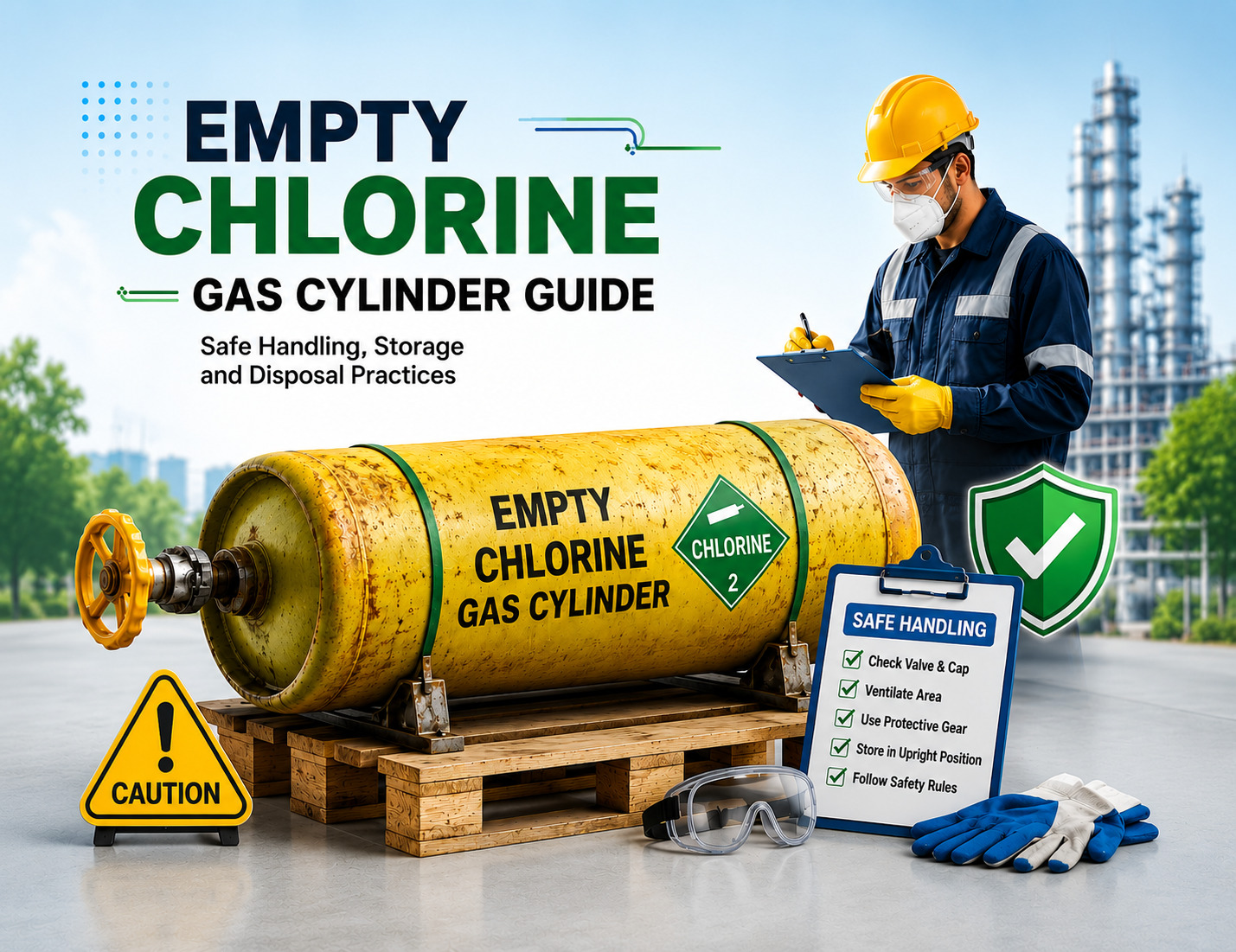
Empty Chlorine Gas Cylinders guide
Empty Chlorine Gas Cylinders are crucial in the industrial gas supply chain. Though dis-charged, these cylinders must be treated with caution with careful handling measures due to the pressure of residual gas and possible contamination risks. Safe cylinder lifecycle management is essential for industries like water treatment, chemical production, pharmaceuticals, and sanitation to ensure that they operate safely and comply with regulations. Use and handling, storage, inspection, transportation and reuse procedures for empty cylinders of chlorine gas. To prevent industrial hazards and ensure consistent performance, companies using Empty Chlorine Gas Cylinders Manufacturers in Mumbai and Used Chlorine Gas Cylinders Exporters in India need to adhere to appropriate safety and quality protocols.
What Are Empty Chlorine Gas Cylinders?
Empty Chlorine Gas Cylinders are high-pressure steel cylinders which contained chlorine gas for industrial use. They are considered “empty” but may have some chlorine, pressure or gas left.
The major application of these cylinders is to industries that rely on chlorine to treat and disinfect water. Handling procedures are crucial for the safety of storage, transport and reuse.
Key Facts About Empty Chlorine Cylinders
| Feature | Details |
| Type | Industrial Gas Cylinder |
| Material | The mild steel/high strength steel options are also available. |
| Status | Empty but could contain residual gas |
| Primary Use | The storage / transportation of Chlorine |
| Risk Level | Potentially Hazardous |
| Safety Requirement | Mandatory Inspection & Handling |
Why Empty Chlorine Cylinder Safety is Important
Chlorine cylinders can be hazardous even after the cylinder has been used because there may be chlorine gas or pressure in the cylinder.
Key Safety Benefits
- Cuts down on the risk of gas leakages.
- Improves workplace safety
- Prevents environmental hazards
- Ensures regulatory compliance
- Extends cylinder lifecycle
- Supports safe industrial operations
Empty Chlorine Gas Cylinders Manufacturers in Mumbai should ensure that the cylinders meet with the strictest safety and inspection requirement.
Safe Handling of Empty Chlorine Gas Cylinders
Use Trained Personnel
Chlorine cylinders must only be handled by trained and authorized personnel.
Avoid Physical Damage
Avoid dropping, rolling or dragging cylinders while moving.
Use Proper Handling Equipment
Employ cylinder trolleys, chains and lifting equipment specifically designed for industrial gas cylinders.
Check Cylinder Identification
Proper labelling and marking prior to dealing/transportation.
Storage Guidelines for Empty Chlorine Gas Cylinders
Even empty cylinders must be stored properly.
Keep in an upright position
Cylinders should always be stored upright and properly secured.
Ensure Ventilation
Storage rooms should be nicely ventilated to prevent the accumulation of gases in the event of leakage.
Keep Away from Heat Sources
Do not be exposed to direct sunlight, fire or high temperatures.
Separate Storage Zones
| Requirement | Purpose |
| Upright Position | Stability |
| Ventilation | Safety |
| Segregation | Organization |
| Labeling | Identification |
| Inspection Access | Maintenance |
Empty and full cylinders need to be distinctively separated.
Storage Checklist
Inspection of Empty Chlorine Gas Cylinders
Inspection applies to cylinders to ensure they are safe for reuse, transport or refilling.
Visual Inspection
Check for:
- Corrosion or rust
- Physical damage
- Valve condition
- Surface cracks
- Label integrity
Leak Testing
Prior to re-use or export, all cylinders should be tested for leakage.
Documentation Verification
Make sure the certification and testing reports and maintenance records are current.
Reliable Used Chlorine Gas Cylinders Exporters in India always undergo strict inspections prior to exporting its cylinders abroad.
Transportation Guidelines
It is important that empty chlorine cylinders are transported safely.
Best Practices
- Package cylinders securely when transporting.
- Use approved transportation vehicles
- Maintain upright positioning
- Make sure the hazard labeling is displayed
- Adhere to standards of regulatory compliance
Transportation Safety Checklist
| Requirement | Importance |
| Secure Loading | Prevent Movement |
| Proper Labeling | Safety Compliance |
| Inspection Verified | Risk Reduction |
| Certified Transport | Legal Compliance |
| Emergency Readiness | Accident Handling |
Reuse and Refurbishment of Chlorine Cylinders
A large percentage of empty chlorine cylinders can be reused after a suitable inspection and certification.
Reconditioning Process
- Cleaning and decontamination
- Valve repair or replacement
- Hydrostatic testing
- Surface treatment
- Final certification
Benefits of Reuse
- Cost efficiency
- Sustainable usage
- Reduced industrial waste
- Extended product lifecycle
Many industries that buy Empty Chlorine Gas Cylinders Manufacturers in Mumbai prefer refurbished cylinders for their efficient operation.
Industrial Applications of Chlorine Cylinders
Chlorine cylinders are available, and are used in many industries:
- Municipal Water Treatment Plants
- Chemical Manufacturing Units
- Pharmaceutical Industries
- Textile Processing Units
- Paper & Pulp Industries
- Food Processing Facilities
Reliable chlorine supply is essential to these industries for disinfection and processing.
Precautions for Workers
Personal Protective Equipment (PPE)
- Safety goggles
- Chemical-resistant gloves
- Protective clothing
- Safety shoes
- Use of respiratory protection (where appropriate)
Emergency Preparedness
- Leak detection systems
- Emergency evacuation plans
- First aid stations
- Safety training programs
- Incident reporting systems
These are some of the common mistakes that should be avoided:
Ignoring Cylinder Inspection
Not inspecting raises safety hazards.
Improper Storage Conditions
Hazards can result from poor ventilation and from heat exposure.
Untrained Handling
Cylinders must only be handled by trained workers.
Improper Transport Practices
Improper loading or securing may cause accidents.
How to Choose Reliable Cylinder Suppliers
Key Factors
| Factor | Importance |
| Quality Standards | Safety Assurance |
| Industry Experience | Reliability |
| Certification | Compliance |
| Inspection Process | Safety Guarantee |
| Supply Capacity | Business Continuity |
When it comes to Empty Chlorine Gas Cylinders Manufacturers in Mumbai, it is crucial to work with trusted manufacturers to ensure better quality control and long-term reliability.
There are many reasons for choosing Yura Chem International.
Yura Chem International is a well reputed company in the field of Industrial Chemical & Gas Solutions. The company specializes in quality, safety and supply chain management of its industrial clients in India and global markets.
Key Advantages
- Strict quality control standards
- Industry-compliant safety practices
- Reliable supply chain network
- Technical support for clients
- Customer-focused service approach
- Experience in industrial chemical handling
Yura Chem International supplies the organizations that work with Used Chlorine Gas Cylinders Exporters in India the good thing is that they can rely on the organization for their supplies and also for the professional support they need.
Conclusion
Even when used, Empty Chlorine Gas Cylinders must be handled, stored, transported and inspected carefully. Adhering to the safety rules reduce the hazards at the workplace, meets the regulatory requirements and helps prolong cylinder life. Businesses can ensure safe, efficient, and sustainable industrial operations by collaborating with reputable Empty Chlorine Gas Cylinders Manufacturers in Mumbai and trusted Used Chlorine Gas Cylinders Exporters in India.